


You know that person.
They wake up clear. They have energy that lasts the whole day. They are present at the table, present in the conversation, present in their own body. They laugh easily. They want things. They say yes to the trip, the second course, the late walk home. Life is not something they get through. It is something they are in.
We tend to think of that person as lucky. Good genes, good sleep, a lighter load. But here is what I have come to believe: that person is not an exception. That person is the default. Vitality is what a body does when nothing is in the way. Lightness, clarity, appetite for life - your natural state, and the body is always trying to return to it.
So the question was never how to become that person. The question is what is standing between you and them.
For me, for years, it was my gut.
Not dramatically. I wasn’t ill. I was just slightly out of alignment, most days. Puffy in the morning. Heavy after lunch. A low hum of discomfort that I had stopped noticing because it had become the weather. And here is the thing nobody told me: when the body is out of alignment, the true self doesn’t show. Not because it’s gone. Because it’s muffled. You’re still there, but you’re living at seventy percent, and you’ve forgotten that a hundred was ever available.
The gut and the brain are in constant conversation, and most of what your brain knows about how you’re doing comes up from below. When the gut is quiet and well, the brain gets a clear signal: all is well, go live. When the gut is struggling, the brain gets that message instead, all day, whether you’re aware of it or not.
Once I read into how this works, a lot of things about my body stopped being mysterious. Here is what I wish someone had told me earlier.
Your gut has a brain of its own
About 500 million nerve cells line your digestive tract. That’s more than in your spinal cord. Scientists call it the enteric nervous system, and people call it the second brain for a reason.
It can run digestion on its own. Sensing what has arrived, mixing it, moving it along, releasing the right fluids at the right time. It does all of this without asking the brain in your head. It doesn’t think. But it decides a lot without you.

They talk through one nerve, and the gut does most of the talking
The vagus nerve runs from the base of the brain down through the chest to the gut. It’s the longest cranial nerve in the body, and on the way it touches the heart and the lungs. That’s why a shock can change your heartbeat, your breathing and your stomach in the same second.
This is the fact that changed how I think about my body: about 80% of the fibres in the vagus nerve carry information upward, from the gut to the brain. Not the other way around. The gut reports on how stretched the stomach is, what nutrients have arrived, which hormones are circulating. The brain mostly listens.
So “gut feeling” is not a metaphor. A lot of what your brain knows about how you’re doing comes from below. And that includes how alive you feel.
Digestion starts before you eat
Before the first bite, your brain has already started the meal. When you see, smell or taste food, it signals the gut. Saliva flows. The stomach starts releasing acid. The pancreas starts preparing enzymes. Physiologists call this the cephalic phase of digestion.
The practical meaning: a meal you notice is a meal your body is ready for. A meal eaten over a laptop, in five minutes, between two calls, skips the warm-up. I ate most of my lunches that way for a decade.
Stress puts digestion on hold
This is the one that explained my pattern.
Under stress, your body switches on the sympathetic nervous system. Fight or flight. Blood moves away from the gut and towards the muscles. The stomach empties more slowly. Digestion is not an emergency, so your body puts it on hold until the emergency passes. The problem is that for most of us, the emergency never passes. It’s just Tuesday.
The opposite mode is the parasympathetic system, and its nickname tells you everything: rest and digest. The same meal, eaten calm or eaten rushed, is handled by two different versions of your body. I was always eating with the rushed one.
The serotonin thing, told properly
You’ve probably read that 90% of your serotonin is made in your gut, and that this means your gut makes your happiness. The first part is true. The second isn’t.
Gut serotonin is made by cells in the gut lining, and it stays in the gut. Its job is to help move food along. It cannot cross the blood-brain barrier, so it isn’t the serotonin your brain uses. The brain makes its own.
What’s true is less quotable and more interesting. The gut sends the brain an enormous amount of information, and the brain’s sense of how you feel is built partly from it. You don’t need the myth. The real thing is enough.
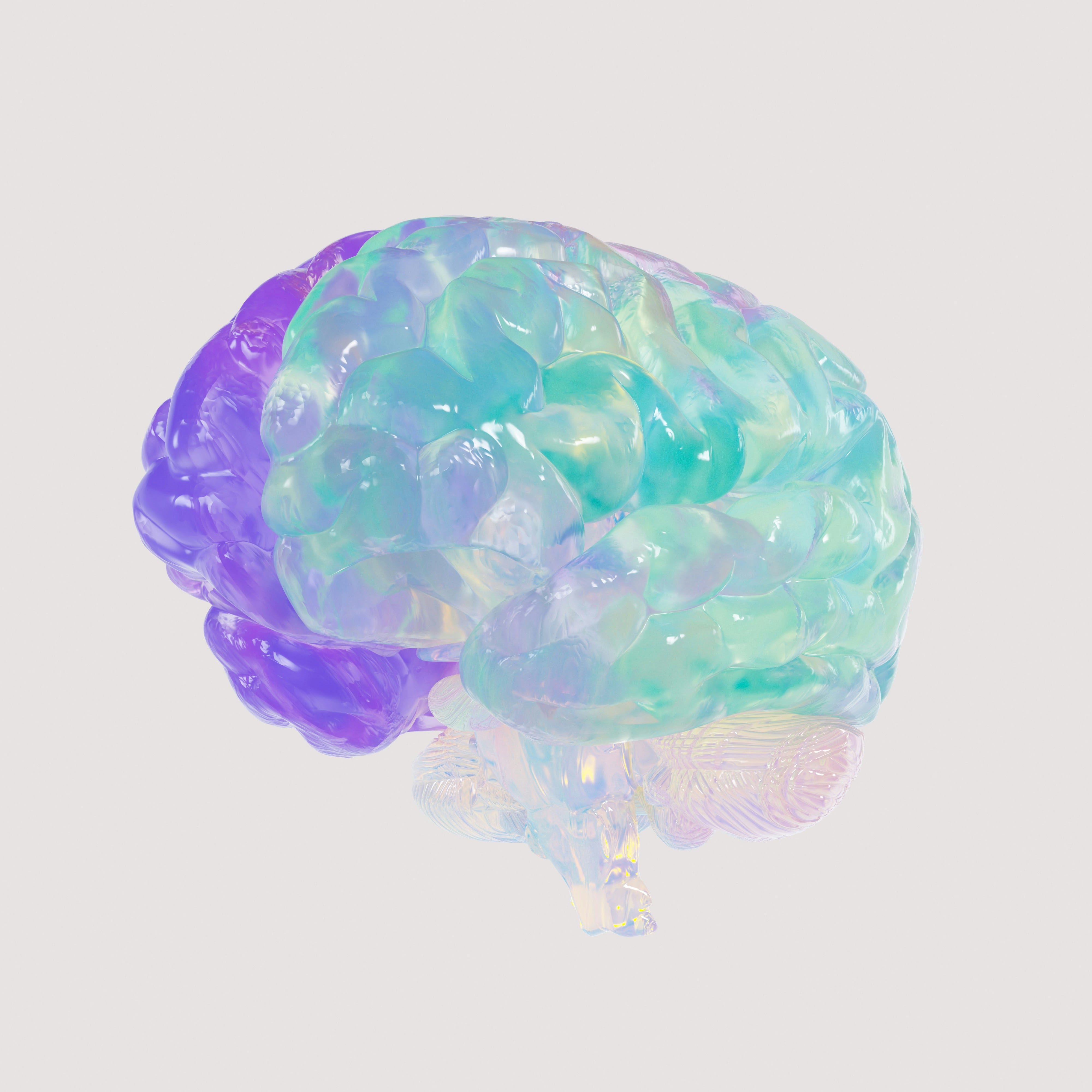
When the gut is struggling, the brain hears about it
I want to be careful here, because this is where the most confident claims online live.
What researchers observe is clear enough. People with long-term gut problems report lower mood, more anxiety and worse sleep than people without them, at rates that are hard to dismiss. And the link runs both ways. Gut trouble makes a stressful week worse, and a stressful week makes gut trouble worse.
Why it happens is still being worked out. The vagus nerve carrying distress signals upward. Low-grade inflammation in the gut lining reaching the brain. Gut bacteria producing compounds that influence the nervous system. The microbiome evidence is mostly from animals so far. The honest summary is: a real connection, mechanism not settled.
What I would not conclude from it: that any food, supplement or protocol fixes your mood through your gut. Nobody has shown that in a way that survives a careful reader. If someone tells you they have, ask for the study.
What I do with this
If the gut is the thing standing between you and that person, then the work is not adding more. It is removing what gets in the gut’s way. For me that comes in two layers.
The fundamentals
These are the ones I built my 80/20 on. They are about what reaches the gut, and in what state.
I eat food that is still alive. Fruit, vegetables, leaves, things that were recently growing. Most of my plate, most days, is food that would rot if I left it out, because that is the food my gut knows what to do with. The further a food is from how it grew, the more work it asks of me.
I keep flesh to a minimum. Meat is the slowest thing to digest and the heaviest to carry. I don’t moralise about it, and I’m not strict. But I noticed years ago that my clearest days were the days I didn’t eat it, and I have never found a reason to argue with that.
I combine with care. Light before heavy. Fruit alone, on an empty stomach, not after a meal. Protein with vegetables, or starch with vegetables, but not a large protein and a large starch in the same sitting. The science on food combining is thinner than I’d like and I’ll say so plainly. The experience, for me, is not thin at all: the same ingredients, sequenced differently, give me a completely different afternoon.
I don’t pour cold water on a meal. Digestion is warm work. Ice water with food, for me, means a heavier, slower stomach. I drink before, I drink after, and at the table I drink little, and warm if anything.
The conditions
These are the ones this post is really about. They are about the state the gut is in when the food arrives, which is where the brain comes in.
I sit down. At a table when there is one. Not the sofa with a laptop.
I look at the food first. Thirty seconds. It sounds silly. It’s the cephalic phase, and it starts the meal before the meal.
I eat slowly and I chew. The stomach’s stretch signals take time to reach the brain. Fast eating outruns them, which is why I used to finish lunch and still feel like I hadn’t eaten.
I leave the hard email until after. If stress puts digestion on hold, the meal eaten while arguing on Slack is the meal that sits badly. You already knew that. Now you know why.
I breathe out longer than I breathe in, for a minute, if I’m wound up before eating. A long exhale is the simplest known way to nudge the vagus nerve towards rest and digest. It costs nothing.
And then there’s my 80/20. Most days I manage the fundamentals and two of the conditions. On a good day, all of it. On a great day, I’m at a table with people I love and it happens without trying. That’s the point. The body already knows how to be well. None of this is a wellness aesthetic. It’s you getting out of your own way. And that person, the one who wakes up clear and says yes to the late walk home, has been you the whole time.
Squeaky Clean is editorial and isn’t medical advice. If your gut or your mood has been difficult for a while, that’s a conversation for a doctor, not a newsletter.
I co-founded Samsa, which makes a digestive enzyme supplement. Weigh everything above accordingly.